
Why Guard Presence Alone Does Not Equal Effective Security
Many organizations believe their security problem is solved once an officer is placed at the property. But guard presence and security performance are two very different things.
A professional security company should be doing far more than filling scheduled shifts. Its role is to translate physical and operational risks into a structured security program that determines where guards should be positioned, what they should monitor, how incidents should be escalated and how management will measure results.
The better question is: “Where can a security failure create the greatest operational, financial, safety or business consequence?”
That distinction separates sophisticated security guard companies from providers that simply sell guard hours.
Businesses considering professional protection can review the full range of security services available through All Star Security Services.
Imagine two properties that each employ two security officers. On paper, the coverage appears identical.
At the first property, guards work with documented post orders, controlled entrances, defined patrol zones, escalation procedures, supervisor oversight and incident reporting.
At the second property, guards have simply been instructed to “watch the site.”
Both businesses are paying for security personnel. Only one has a structured security operation.
Build an Exposure Map Before Building a Guard Schedule
An effective security schedule should be created only after the property, assets, people and operating conditions have been evaluated.
Experienced security companies typically need to understand four categories of exposure before determining how security personnel should be deployed.
Asset Exposure
Identify equipment, inventory, vehicles, materials, sensitive rooms and other assets whose theft or damage could create significant loss.
Access Exposure
Review entrances, gates, loading areas, employee doors, parking structures and visitor routes that could provide uncontrolled access.
Time Exposure
Determine when risk increases. A property may have low exposure during business hours but become substantially more vulnerable overnight.
Consequence Exposure
Evaluate not only the probability of an incident but how severely it could affect operations, projects, employees, customers or assets.
The Six Layers of a High-Performance Security Program
A dependable security guard company converts individual officers into a coordinated protection system. These six layers form the foundation of that system.
Risk Assessment
Determine vulnerable areas, operating patterns, valuable assets, access points and periods of increased exposure.
Deployment Strategy
Decide where fixed officers, foot patrols, mobile patrols or other security resources provide the greatest operational value.
Post Orders
Convert management expectations into clear instructions covering patrols, access, incidents, reporting and site responsibilities.
Escalation
Establish what officers should do when routine irregularities, suspicious activity or active incidents occur.
Reporting
Transform patrol and incident information into usable intelligence for property owners and management teams.
Optimization
Review recurring patterns and change deployment when the site's risk profile or operating conditions evolve.
Match the Security Method to the Actual Exposure
Not every security issue requires a permanently stationed officer. The right deployment depends on what the security program is intended to protect.
Fixed-Post Security
Appropriate where continuous access management or observation is required, including lobbies, gates, employee entrances, residential communities and restricted facilities.
Foot Patrol Security
Useful where officers must physically inspect exterior doors, parking structures, loading areas, equipment zones, stairwells, perimeter fencing or other locations that cannot be effectively monitored from one post.
Vehicle Patrol Security
Suitable for larger properties, industrial facilities, developments, warehouses and multi-building environments.

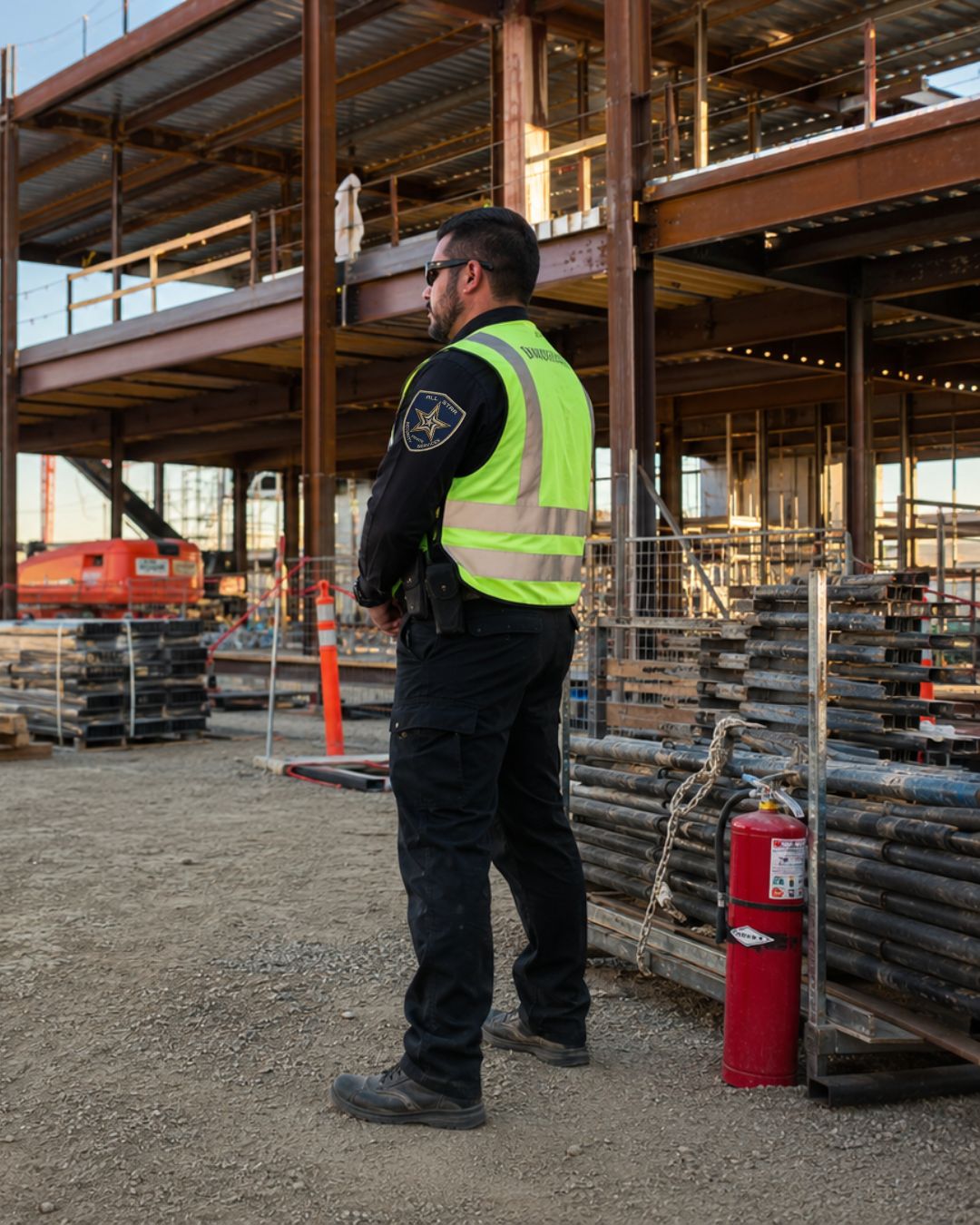
Post Orders Turn a Security Contract Into Real Guard Performance
Without detailed post orders, different security officers may interpret the same assignment differently.
- Assigned patrol zones and checkpoints
- Restricted areas and access requirements
- Visitor and contractor procedures
- Delivery and vehicle controls
- Opening and closing checks
- Incident notification requirements
- Emergency contacts and escalation
- Property-specific vulnerabilities
Strong post orders reduce uncertainty and create more consistent protection between different officers, shifts and supervisors.
Reporting Should Produce Intelligence — Not Just Paperwork
A report has limited value if nobody uses it to improve the security program. The real benefit appears when multiple reports reveal patterns.
Suppose a property records several attempted entries through the same side gate, repeated activity near an equipment area and multiple exterior doors found unlocked.
Individually, each incident may appear minor. Together, they reveal a recurring weakness.
- Which areas generate the most incidents?
- When are problems occurring?
- Are vulnerabilities recurring?
- Should patrol frequency change?
- Does coverage need to shift to another area or time?
For businesses requiring structured property protection, explore commercial security guard services and customized guard programs.
What Separates a Basic Guard Provider From a Professional Security Company?
| Security Function | Basic Guard Coverage | Professional Security Program |
|---|---|---|
| Site Assessment | Minimal or generic | Property-specific risk review |
| Guard Deployment | Based mainly on requested hours | Based on risk zones and vulnerable periods |
| Post Orders | General instructions | Detailed site-specific responsibilities |
| Patrols | Routine or predictable | Structured around priority areas |
| Reporting | Activity documentation only | Reports used to identify patterns |
| Supervision | Limited oversight | Defined management and accountability |
| Coverage Changes | Static schedule | Adjusts when operating conditions change |
| Client Communication | Incident-driven | Ongoing operational communication |
Not sure whether your current security coverage matches your risk?
Request a review of your property, project, event or facility.

Security Coverage Drift: The Problem Many Businesses Miss
A security plan can be correctly designed on day one and gradually become less effective as the property changes.
Six months later, a business may have:
- Opened another building
- Changed employee schedules
- Added valuable equipment
- Relocated a gate or entrance
- Increased visitor traffic
- Changed contractor access
- Expanded parking operations
- Entered another construction phase
If security deployment stays exactly the same, coverage can become misaligned with the current environment.
A capable security guard company should therefore support periodic review rather than treating the original deployment as permanent.
The 30-Day Security Optimization Cycle
High-risk and rapidly changing properties can benefit from a simple recurring framework that turns guard activity into security improvement.
Observe
Collect patrol activity, access data, incidents and recurring site observations.
Analyze
Identify recurring locations, shifts, behaviors and operational vulnerabilities.
Adjust
Modify patrol timing, post orders, officer positioning or access procedures.
Review
Measure whether the adjustment reduced exposure and determine the next priority.
Security Guard Companies Should Be Evaluated Beyond the Officer on Site
The individual officer is important, but the operating infrastructure behind that officer can determine whether service remains consistent over time.
Operational Infrastructure
Client Accountability
Cheap Guard Hours Can Become Expensive Security
Hourly cost is an important procurement consideration, but price alone does not measure the true economic value of a security program.
A lower rate can become expensive when it is accompanied by inconsistent coverage, weak reporting, frequent guard replacement, poor supervision or unclear procedures.
Decision-makers should also consider the potential cost of:
- Coverage gaps
- Management time spent resolving service problems
- Equipment or inventory loss
- Property damage
- Operational interruption
- Construction delays
- Poor incident documentation
- Tenant, visitor or customer complaints
At the same time, more guards do not automatically mean better protection. Professional security planning should aim for the right level of coverage in the right locations at the right times.
How Deployment Strategy Changes Across Different Properties
A professional security company should not use the same operating plan for every industry.
Construction Security →
Commercial Security →
Event Security →
Residential Security →
Fire Watch Services →
Parking Security →
View Security Services →
Discuss Multi-Site Coverage →
What a Serious Security Proposal Should Explain
When businesses compare security companies, a useful proposal should explain the security logic — not simply provide an hourly price.
Security Requirements
Operational Accountability
Five Better Questions to Ask Your Security Company
What Have You Learned?
Ask what the security team has learned about your property during the previous 30–90 days.
Where Is Exposure Highest?
Your provider should be able to identify current vulnerabilities rather than repeating the original proposal.
Should Deployment Change?
Determine whether changing business conditions justify adjustments to posts, patrols or schedules.
What Is Producing Value?
Identify which security activities are providing the greatest operational benefit.
Where Could Coverage Be More Efficient?
Professional security management should identify where resources could be repositioned or adjusted to improve protection without automatically increasing guard hours.
Professional Security Programs Across Northern California
Security requirements vary by property, operating environment and location. Explore location-specific protection options from All Star Security Services.
Bay Area
Customized security solutions for businesses, developments, events and properties throughout the Bay Area.
Bay Area Security →San Francisco
Professional guard coverage for commercial properties, construction projects and other San Francisco operations.
San Francisco Security →Sacramento
Security guard and patrol solutions designed around Sacramento businesses, properties and project requirements.
Sacramento Security →California
Explore customized security programs for commercial, residential, construction and event requirements.
California Security Company →From Security Coverage to Security Performance
The strongest physical security programs are not built around simply adding more guards. They are built around deploying the right security resources against clearly identified risks.
A highly trained guard with unclear instructions can still deliver inconsistent service. Detailed incident reports that are never reviewed create little strategic value. An excellent security program that is never updated can eventually become outdated.
This is why businesses evaluating a security guard company should examine the entire operating system behind the officers — not simply the number of people assigned to the site.
All Star Security Services provides customized protection for businesses, commercial properties, residential communities, construction sites, events and other security-sensitive environments.
Explore All Star Security Services or request a customized security assessment for your property.